LiFi vs WiFi Lighting: A B2B Buyer Guide to Connected Lighting Technologies
The connectivity decision shaping the future of commercial lighting
As commercial buildings become smarter, the choice of wireless connectivity for lighting systems has emerged as a critical procurement decision. Two technologies dominate this space: LiFi (Light Fidelity) and WiFi (Wireless Fidelity). For B2B buyers evaluating connected lighting solutions, understanding the strengths, limitations, and total cost implications of each technology is essential for making informed decisions.
This guide provides a structured comparison of LiFi and WiFi lighting technologies, helping procurement teams evaluate which approach best aligns with their facility requirements, security needs, and long-term scalability goals.
Understanding LiFi and WiFi: Core technology differences
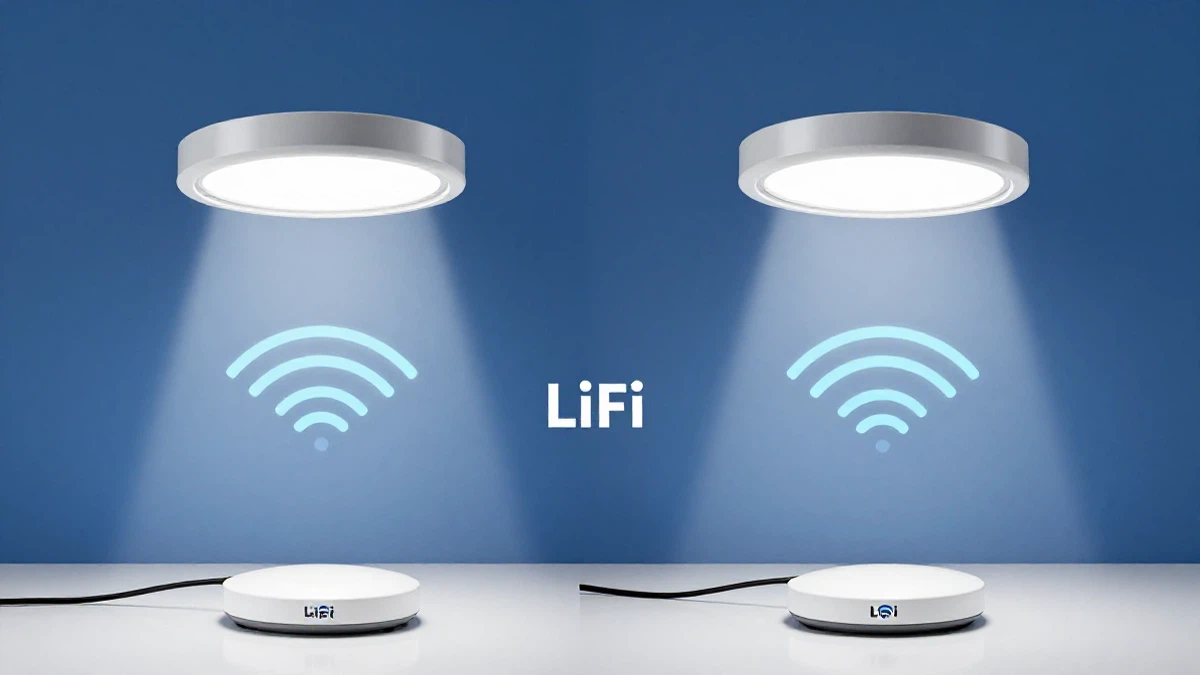
While both LiFi and WiFi enable wireless connectivity, they operate on fundamentally different principles with distinct implications for lighting applications.
LiFi (Light Fidelity)
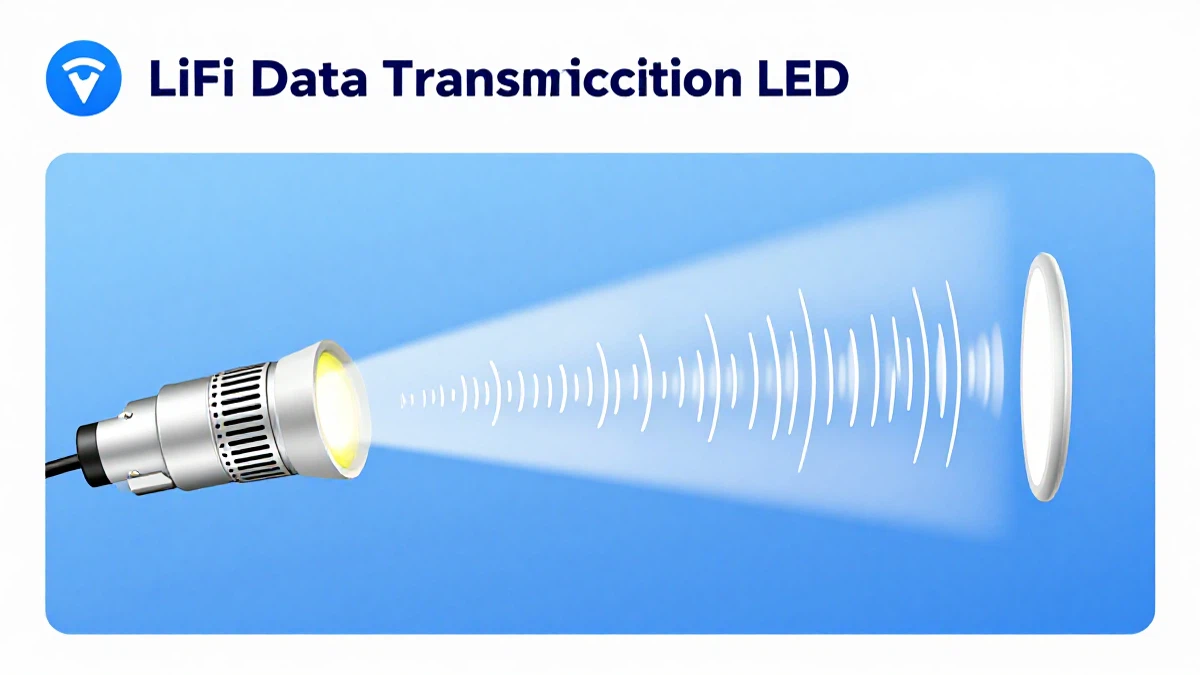
LiFi uses light waves from LED fixtures to transmit data. Every LED luminaire becomes a data access point, transmitting information through rapid, imperceptible modulation of light intensity.
Key Characteristics:
- Transmission Medium: Visible light spectrum
- Range: Limited to line-of-sight within illuminated areas
- Infrastructure: Requires LiFi-enabled LED fixtures and receivers
- Interference: Immune to radio frequency interference
WiFi (Wireless Fidelity)
WiFi uses radio frequency (RF) waves to transmit data through traditional wireless access points. Lighting fixtures connect to the building’s existing WiFi network or dedicated lighting WiFi infrastructure.
Key Characteristics:
- Transmission Medium: Radio frequency spectrum (2.4 GHz, 5 GHz, 6 GHz)
- Range: Extends through walls and obstacles
- Infrastructure: Leverages existing WiFi or requires dedicated access points
- Interference: Subject to RF congestion in dense environments
Head-to-head comparison: LiFi vs WiFi for lighting
| Feature | LiFi | WiFi | Winner |
|---|---|---|---|
| Data Speed | Up to 100 Gbps (theoretical), 1-10 Gbps (practical) | Up to 9.6 Gbps (WiFi 6E), 1-3 Gbps (practical) | LiFi |
| Security | Light cannot penetrate walls; contained within rooms | RF signals extend beyond boundaries; encryption required | LiFi |
| Coverage | Line-of-sight only; requires multiple fixtures | Penetrates walls; broader coverage per access point | WiFi |
| Interference | Immune to RF interference | Subject to RF congestion in dense environments | LiFi |
| Infrastructure Cost | Requires LiFi-enabled fixtures; higher upfront | Leverages existing WiFi; lower upfront | WiFi |
| Installation Complexity | Requires specialized fixtures and receivers | Standard WiFi installation; familiar to IT teams | WiFi |
| Energy Efficiency | Dual-purpose (lighting + data); highly efficient | Separate infrastructure; additional power consumption | LiFi |
| Scalability | Scales with lighting infrastructure; predictable | Limited by WiFi spectrum and access point capacity | Context-dependent |
Security considerations for B2B buyers
Security is often the primary differentiator driving LiFi adoption in commercial environments.
LiFi Security Advantages
Physical Containment: Light cannot penetrate walls, making LiFi inherently more secure. Data transmission is physically contained within the illuminated space, eliminating the risk of external eavesdropping.
No RF Emissions: In environments where RF emissions are restricted (healthcare, defense, industrial), LiFi provides connectivity without electromagnetic interference concerns.
Reduced Attack Surface: Each LiFi access point serves a limited area, reducing the potential impact of a security breach.
WiFi Security Considerations
Encryption Required: WiFi relies on encryption protocols (WPA3, enterprise authentication) to secure data transmission. While robust, these require proper configuration and ongoing management.
Signal Containment Challenges: RF signals extend beyond intended boundaries, requiring additional measures (power adjustment, directional antennas) to limit exposure.
Established Security Practices: WiFi benefits from decades of security development, with mature tools and practices for enterprise deployment.
Procurement Insight: For high-security environments (government, defense, healthcare, finance), LiFi offers inherent physical security advantages. For general commercial applications, properly configured WiFi provides adequate security with lower complexity.
Total cost of ownership analysis
A comprehensive TCO analysis should evaluate both upfront and long-term costs for each technology.
LiFi Cost Components
Infrastructure Costs:
- LiFi-enabled LED fixtures (premium over standard LED)
- LiFi receivers and gateways
- Network backbone connectivity
Operational Costs:
- Specialized maintenance expertise
- Replacement parts (LiFi-specific components)
- Software licensing and management platforms
Long-term Considerations:
- Dual-purpose infrastructure (lighting + data) reduces overall cabling
- Energy efficiency from LED-based transmission
- Future-proofing for bandwidth-intensive applications
WiFi Cost Components
Infrastructure Costs:
- WiFi access points (if not leveraging existing)
- Lighting fixtures with WiFi modules
- Network infrastructure upgrades (if required)
Operational Costs:
- Standard IT maintenance (familiar expertise)
- Replacement parts (commodity components)
- Software licensing and management platforms
Long-term Considerations:
- Leverages existing IT infrastructure and expertise
- Potential for RF spectrum congestion in dense deployments
- Regular WiFi standard upgrades (WiFi 6, 6E, 7)
Procurement Insight: LiFi typically carries 20-40% higher upfront costs but may offer long-term savings through dual-purpose infrastructure. WiFi offers lower initial investment with predictable operational costs.
Application-specific recommendations
Different commercial environments favor different technologies based on their unique requirements.
LiFi Best Suited For
| Application | Why LiFi |
|---|---|
| Healthcare Facilities | No RF interference with medical equipment; enhanced patient data security |
| Government/Defense | Physical containment meets security clearance requirements |
| Financial Services | Enhanced security for sensitive transactions; regulatory compliance |
| Industrial Environments | Immune to RF interference from machinery; hazardous location compatible |
| Open Plan Offices | High-density connectivity without RF congestion |
WiFi Best Suited For
| Application | Why WiFi |
|---|---|
| General Office Buildings | Leverages existing infrastructure; lower upfront cost |
| Retail Environments | Broad coverage supports customer WiFi and lighting control |
| Educational Facilities | Familiar technology for IT staff; scalable across campuses |
| Hospitality | Supports guest WiFi and lighting control from single infrastructure |
| Multi-Story Buildings | RF penetration reduces access point count |
Vendor evaluation checklist for LiFi and WiFi lighting
When evaluating vendors, consider technology-specific criteria alongside general vendor qualifications.
LiFi-Specific Criteria
- LiFi alliance certification or compliance
- Proven deployments in similar environments
- Interoperability with existing lighting systems
- Receiver compatibility and availability
- Bandwidth guarantees under real-world conditions
- Technical support expertise in LiFi technology
WiFi-Specific Criteria
- WiFi 6/6E/7 compatibility
- Integration with existing network infrastructure
- QoS (Quality of Service) support for lighting traffic
- Network segmentation capabilities
- Scalability to support additional IoT devices
- IT team training and documentation
Common procurement pitfalls and how to avoid them
Pitfall 1: Underestimating LiFi Infrastructure Requirements
LiFi requires specialized fixtures and receivers throughout the deployment area.
Mitigation: Conduct thorough site surveys to determine fixture density and receiver placement. Budget for complete infrastructure rather than partial deployment.
Pitfall 2: Overlooking WiFi Spectrum Planning
Dense WiFi deployments can lead to channel congestion and performance degradation.
Mitigation: Engage network engineers early for spectrum analysis and access point placement planning. Consider WiFi 6E for additional spectrum availability.
Pitfall 3: Ignoring Hybrid Approaches
Some environments benefit from combining LiFi and WiFi technologies.
Mitigation: Evaluate hybrid deployments where LiFi serves high-security or high-density areas while WiFi covers general spaces.
Pitfall 4: Focusing Only on Upfront Costs
LiFi’s higher initial investment may deliver long-term value through dual-purpose infrastructure.
Mitigation: Develop 5-year and 10-year TCO models that account for energy efficiency, maintenance, and future bandwidth requirements.
FAQ: LiFi vs WiFi Lighting
What is the maximum range of LiFi lighting systems?
LiFi range is limited to line-of-sight within illuminated areas, typically 3-10 meters depending on fixture power and receiver sensitivity. This limitation enhances security but requires more access points for large spaces.
Can LiFi and WiFi coexist in the same building?
Yes, LiFi and WiFi can coexist and complement each other. LiFi can serve high-security or high-density areas while WiFi provides general coverage. Many commercial deployments use hybrid approaches.
What is the actual data speed difference between LiFi and WiFi?
In practical deployments, LiFi typically achieves 1-10 Gbps while WiFi 6/6E achieves 1-3 Gbps. However, real-world performance depends on deployment density, interference, and network configuration.
Is LiFi compatible with existing LED fixtures?
Most existing LED fixtures require upgrades or replacement for LiFi functionality. LiFi requires specialized drivers and modulation capabilities not present in standard LED fixtures.
What are the ongoing maintenance differences between LiFi and WiFi?
LiFi requires specialized expertise for troubleshooting and repairs, while WiFi leverages standard IT skills. LiFi components may have longer lead times for replacement compared to commodity WiFi components.
How does LiFi security compare to encrypted WiFi?
LiFi offers inherent physical security (light containment) while WiFi relies on encryption. For most commercial applications, properly configured WiFi encryption (WPA3-Enterprise) provides adequate security. LiFi’s advantage is most relevant for high-security environments.
Conclusion
The choice between LiFi and WiFi lighting technologies depends on specific facility requirements, security needs, and budget constraints. LiFi offers superior security, bandwidth, and RF immunity at higher upfront costs. WiFi provides lower initial investment, broader coverage, and familiar IT integration with ongoing spectrum management considerations.
For B2B buyers, the key is to evaluate both technologies against specific use cases rather than seeking a universal winner. High-security environments, healthcare facilities, and RF-sensitive applications favor LiFi. General commercial buildings, retail, and hospitality environments often find WiFi more cost-effective.
The organizations that succeed with connected lighting are those that engage cross-functional teams (facilities, IT, security) early, develop comprehensive TCO models, and remain open to hybrid approaches that leverage the strengths of both technologies.
Related Articles: