Avoid Blinding Hotel Lighting: 3 Design Mistakes and How to Fix Them
Three Hotel Lighting Mistakes That Make Premium Interiors Feel Uncomfortable
In hotel projects, lighting problems are rarely caused by a total lack of fixtures. More often, they come from the wrong light in the wrong place, or from technical decisions that seem minor during specification but become obvious once guests start using the space. This is why some expensive interiors still feel visually harsh, inconsistent, or strangely tiring to occupy.
For hospitality teams, the most useful approach is not to chase dramatic lighting effects first. It is to avoid the mistakes that damage comfort and perception at a basic level. Three issues appear repeatedly across guest rooms, lobbies, dining areas, and circulation spaces: glare, inconsistent color appearance, and weak electrical quality.
Mistake One: Treating Brightness as Quality
Why It Happens
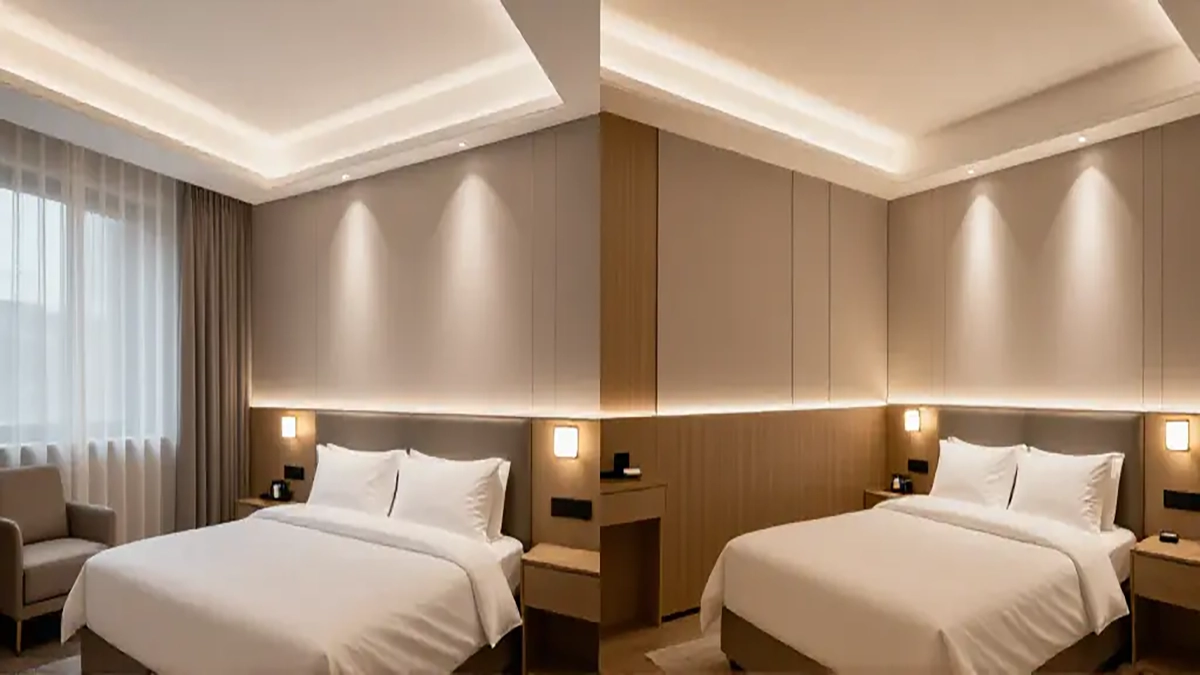
Many hotel lighting schemes are still evaluated too quickly by how bright the renderings or sample areas look. This often leads to downlights, spotlights, or decorative sources being specified without enough attention to shielding, beam control, or viewing angle.
The result is a familiar hospitality problem: surfaces may be illuminated, but guests experience the space as sharp, uncomfortable, or overexposed. In lounges, lobbies, and restaurants, this usually reduces the sense of calm that premium interiors are supposed to deliver.
What to Do Instead
Teams should evaluate optical comfort directly, not treat it as a side issue. In practical terms, that means checking:
- glare control in normal guest sightlines
- luminaire shielding and cutoff
- beam angle relative to ceiling height and seating position
- whether decorative fixtures create uncontrolled brightness at eye level
In hospitality settings, a lower-glare scheme usually feels more premium than a brighter but harsher one. Standards such as UGR can help guide specification, but the key point is application discipline. A good numerical target still needs the right fixture behavior in the real room.
Mistake Two: Allowing the Space to Lose Color Consistency
Why It Happens
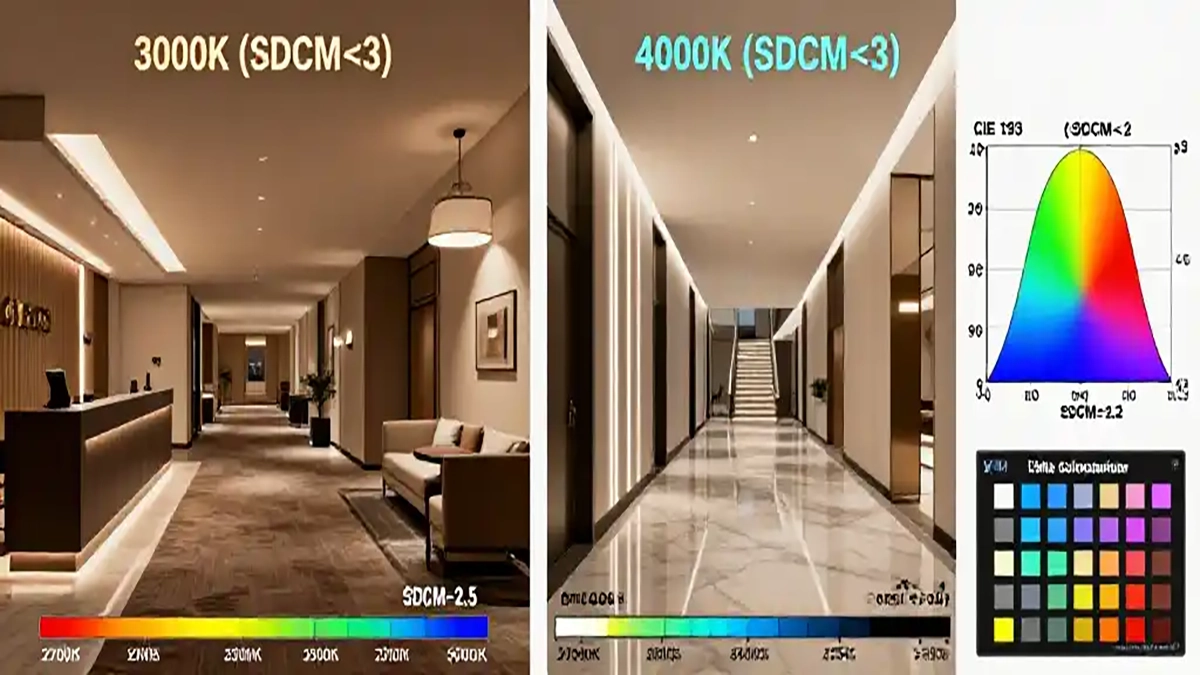
Hotels often combine multiple fixture types across public and private areas: downlights, wall lights, decorative pendants, vanity lights, concealed linear lighting, and accent luminaires. If these sources are selected in isolation, the finished space can end up with visible shifts in color temperature or color quality.
That inconsistency is one of the fastest ways to make a high-budget project feel unresolved. A lobby may look warm and intentional in one area, then unexpectedly cool or flat in another. A guest room may feel cohesive during the day but visually fragmented at night.
What to Do Instead
Color strategy should be decided at the room or zone level, not fixture by fixture. Useful controls include:
- selecting a clear target color temperature for each hospitality setting
- reviewing batch consistency for key luminaires
- checking how decorative and architectural sources appear together
- avoiding unnecessary mixing of warm and neutral-white schemes in the same visual field
For premium projects, consistency is often more important than chasing the widest possible product mix.
Mistake Three: Ignoring Driver Quality and Flicker Behavior
Why It Happens
Lighting is sometimes approved based on fixture appearance and lumen output while driver quality is treated as a hidden technical detail. In hospitality use, that shortcut creates risk. Weak drivers can introduce flicker, unstable dimming, or inconsistent scene behavior, all of which affect the user experience even when guests cannot describe the technical cause.
This matters most in guestrooms, dining environments, and premium public areas where scene control and long occupancy periods are common.
What to Do Instead
Electrical quality should be part of the visible design conversation, not separated from it. At minimum, teams should verify:
- flicker performance
- dimming stability across the usable range
- scene transitions in actual operation
- compatibility between the luminaire, control system, and driver platform
When these basics are weak, the project often feels less refined no matter how strong the decorative concept may be.
A Simple Hotel Lighting Checkpoint Table
| Common mistake | What guests actually feel | Better project response |
|---|---|---|
| Excessive glare | harshness, discomfort, visual fatigue | use better shielding, beam discipline, and lower-glare optical choices |
| Inconsistent color appearance | space feels cheap or unresolved | define zone-based color strategy and verify batch consistency |
| Poor driver quality or flicker | subtle discomfort, unstable scenes, lower perceived quality | treat electrical behavior as part of the design specification |
Why These Basics Matter So Much in Hospitality
Hotels are judged by mood and consistency as much as by architecture. Guests may not know what UGR, SDCM, or flicker metrics mean, but they quickly notice whether a room feels restful, whether a corridor feels harsh, or whether a restaurant atmosphere feels polished.
That is why technical lighting discipline has such a direct effect on brand perception. In hospitality work, poor basics are highly visible because the user experience is continuous and close-range.
Conclusion
The most effective way to improve hotel lighting is often to remove the mistakes that make spaces feel uncomfortable in the first place. Glare, color inconsistency, and weak electrical performance are not secondary issues. They are the problems that most often undermine a premium interior.
For design and procurement teams, getting these fundamentals right usually does more for guest comfort than adding extra fixture types or more elaborate control features. In hotel lighting, restraint and consistency often create the strongest result.
Related Reading: