2026 Q1 Commercial Lighting Procurement Trends: Controls, Retrofit & Supply Chain
Three Procurement Shifts We Keep Seeing in Early 2026
Commercial lighting procurement in early 2026 feels more disciplined than it did even a year ago. Buyers are still comparing price, efficacy, and lead time, but those are no longer enough on their own. More teams are evaluating lighting packages in terms of operational risk: how hard the system will be to commission, how easy it will be to maintain, and how exposed the project is to substitution or delivery problems.
That change is showing up across hospitality, office, education, and mixed-use projects. The strongest RFQs are less interested in abstract “innovation” language and more interested in whether a supplier can support a project from approval through handover.
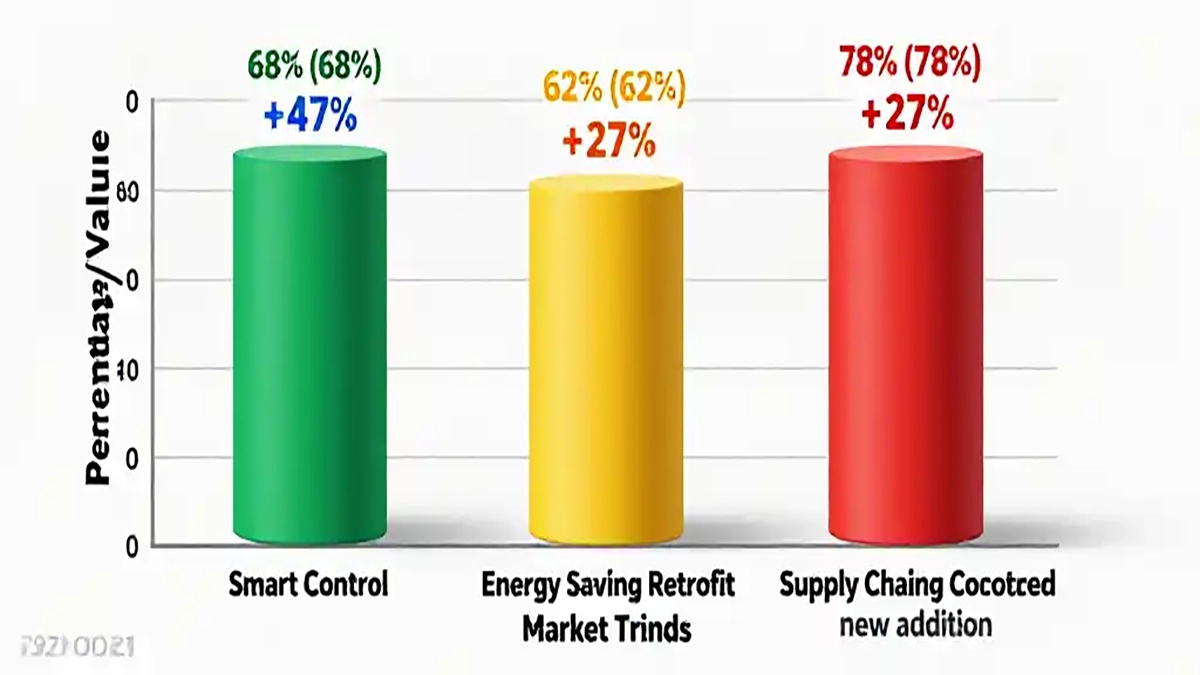
1. Controls Are Becoming Part of the Buying Baseline
The control layer used to be treated as an add-on discussion. In many commercial projects, it now sits inside the initial fixture decision. Buyers want to know whether the proposed package can support dimming, sensing, scene setting, and future maintenance without creating integration friction later.
What procurement teams are asking more often
- Which control protocols or dimming methods are actually supported in shipped configuration?
- Are drivers, sensors, and control accessories part of one coherent system logic?
- Can the contractor commission the package without relying on multiple conflicting vendors?
- What happens if a driver or sensor must be replaced two years after handover?
The practical shift is clear: buyers are trying to avoid projects where the luminaire is approved first and the control strategy is improvised later.
2. Retrofit Work Is Easier To Justify Than Broad Decorative Upgrades
Retrofit budgets are moving faster because they can be explained in business terms. Existing buildings already have operating hours, maintenance patterns, and comfort complaints that make lighting performance visible. That gives procurement teams a clearer case for replacement work than for purely aesthetic upgrades.
Why retrofit keeps winning internal approval
- Energy waste is measurable in existing buildings.
- Maintenance pain points are already known by the operator.
- Controls can often be added to a defined set of high-use zones first.
- The project can be framed as an operational improvement, not only a capex request.
The best retrofit discussions are also more careful about ROI than they used to be. Better buyers now separate savings from efficacy, savings from controls, and savings from maintenance reduction instead of collapsing all value into a single marketing percentage.
Questions that make retrofit procurement stronger
| Procurement question | Why it matters |
|---|---|
| Can existing wiring or mounting geometry be reused? | Labor often changes the commercial case more than fixture price |
| Which spaces actually need control upgrades? | Prevents over-specifying the whole building |
| What is the service path for drivers and controls? | Protects long-term operating value |
| How will light levels and glare compare after replacement? | Avoids a retrofit that saves power but degrades user experience |
3. Supply-Chain Confidence Is Now Being Priced Into Vendor Choice
Unit price still matters, but it is no longer the only lever. More buyers are assigning real value to supplier stability: documentation quality, substitution discipline, spare-part continuity, and response speed when the project team needs answers.
That is happening because procurement teams have been burned often enough by late changes, incomplete paperwork, or products that technically comply on paper but create delays in approval or site execution.
What buyers now want from suppliers
- Clear statements about what is stocked, what is made to order, and what depends on long-lead components
- Consistent photometric and compliance documentation
- A realistic alternative strategy if a component becomes unavailable
- Faster communication on approval packages, lead times, and after-sales support
In other words, the lowest-cost item is increasingly seen as a risky choice if it creates uncertainty elsewhere in the delivery chain.
A Practical Evaluation Framework for 2026 RFQs
The strongest procurement packages tend to balance four layers at the same time.
Technical fit
Optics, glare control, control compatibility, and maintenance access all match the actual application.
Commercial clarity
Payback assumptions, replacement scope, and labor implications are transparent enough to evaluate properly.
Delivery confidence
Lead times, substitutions, and document control are managed before the project reaches site pressure.
Lifecycle support
Warranty, spare parts, and troubleshooting ownership are clear enough for the operator to rely on.
Conclusion
The commercial lighting market in early 2026 is being shaped less by headline product novelty and more by buyer discipline. Controls, retrofit logic, and supply-chain resilience have all moved closer to the center of procurement decisions. Suppliers that can explain performance, risk, and maintainability in practical project language will have a stronger position than those still selling mainly on catalog specs or discount pricing.
Related Reading
- Lighting as a Service (LaaS): Why Commercial Buyers Are Shifting From CAPEX to OPEX
- LED Efficiency Breakthrough 2026: What Buyers Need to Know About the Latest Technology Gains
- DALI-2 vs 0-10V Lighting Controls: Which Is Better for Commercial Projects?
- Warehouse LED High Bay Retrofit in 2026: DLC V6.0 Compliance, Section 179D Tax Deadline & ROI Guide for Facility Managers