The 2026 Guide: How to Find a Reliable OEM Lighting Manufacturer in China
The 2026 Guide: How to Find a Reliable OEM Lighting Manufacturer in China
As the global illumination industry continues to evolve, China remains the undisputed epicenter for manufacturing. Whether you are dealing with commercial, residential, industrial, or specialized architectural illumination systems, partnering with the right production facility is the absolute cornerstone of your business success. However, navigating the vast and complex landscape of overseas procurement in 2026 presents unique challenges. For B2B buyers, distributors, and project managers, the quest to find a truly reliable OEM lighting manufacturer China is fraught with potential pitfalls and strategic hurdles.
The pain points are well-documented and widely experienced across the sector. Procurement professionals often face inconsistent product quality, severe cross-cultural communication barriers, delayed shipments, and the persistent, frustrating challenge of distinguishing genuine manufacturing facilities from sophisticated trading companies or intermediaries. In an era where technological advancements, smart integration, and stringent environmental regulations dictate market trends, securing a reliable lighting supplier is no longer just about negotiating the lowest possible unit price; it is about forging a robust, strategic partnership that guarantees uncompromised quality, strict regulatory compliance, and continuous product innovation.
This comprehensive guide is designed to serve as your definitive roadmap for B2B lighting sourcing 2026. We will delve deep into the essential steps, ranging from initial qualification audits to evaluating intricate quality control systems, and equip you with the actionable knowledge required to identify the absolute best factory for your specific needs while avoiding common, costly sourcing mistakes.
Understanding the 2026 Landscape for B2B Sourcing
The Chinese manufacturing sector has undergone a massive, structural transformation over the past decade. By 2026, the industry has largely shifted away from low-cost, low-quality mass production towards advanced smart manufacturing, highly automated assembly lines, and a significantly heightened focus on sustainable, green production practices. The seamless integration of Internet of Things (IoT) capabilities into everyday illumination products means that factories must now possess stronger Research and Development (R&D) capabilities and more sophisticated electronic engineering teams than ever before.
Regional Expertise and Industry Clusters
Understanding the geographical clusters of production in China is crucial for efficient B2B lighting sourcing 2026. Different regions have developed highly specialized expertise, and knowing where to look is half the battle:
- Zhongshan (Guzhen): Often referred to globally as the “Lighting Capital,” this vast area is renowned for decorative, residential, and custom project fixtures. However, the sheer volume of small-to-medium workshops necessitates rigorous vetting to ensure quality standards are met consistently.
- Shenzhen and Dongguan: These bustling tech hubs excel in high-end LED technologies, complex smart systems, and sophisticated components requiring advanced electronic integration. They typically offer superior technological integration but often at a premium price point.
- Ningbo and Hangzhou: Located in the industrially heavy Yangtze River Delta, this region is a powerhouse for outdoor, industrial, and rugged commercial illumination, boasting strong die-casting and heavy-duty manufacturing capabilities.
Recognizing these distinct regional strengths allows you to strategically narrow down your search for an OEM lighting manufacturer China based entirely on your specific product category, ensuring you are looking in the optimal location from the very beginning.
Core Step 1: Verification and Initial Checks
The first critical phase of finding a reliable lighting supplier involves a meticulous, unforgiving qualification audit. With thousands of potential candidates available through online directories and trade portals, efficiently filtering out the unqualified is a vital first step to protect your time and resources.
Verifying Business Fundamentals and Legal Standing
Before engaging in detailed technical discussions or requesting quotes, verify the manufacturer’s foundational credentials. Demand a copy of their official business license and have it independently verified or translated to confirm their registered capital, exact scope of business, and legal establishment date. A company with a substantial registered capital and a decade-long history is generally far more stable and reliable than a newly established entity with minimal financial backing.
Furthermore, examine their verifiable export records. A genuine, experienced OEM lighting manufacturer China will possess a documented history of exporting successfully to your target market (e.g., North America, Europe, the Middle East). This historical data is a strong indicator of their familiarity with regional compliance standards and international shipping logistics.
Certifications, Compliance, and Safety Standards
In the global illumination industry, safety and performance certifications are absolutely non-negotiable. A reliable lighting supplier must hold essential factory management certifications, most notably ISO 9001:2015 for comprehensive quality management and ISO 14001 for environmental management systems.
Beyond factory-level certifications, their specific product lines must strictly meet the regulatory and safety requirements of your target region. Ensure they possess valid, internationally recognized certificates such as:
- CE, RoHS, and REACH for the stringent European market.
- UL, ETL, FCC, and Energy Star for the highly regulated North American market.
- CB, SAA, or specific local energy efficiency ratings depending on your exact operational locality.
Crucially, do not simply accept a visual scan or a photocopy of a certificate. Always verify the certificate number directly with the issuing laboratory or regulatory body to ensure it is authentic, currently valid, and strictly applicable to the exact product models you intend to source.
Assessing R&D and Technological Capabilities
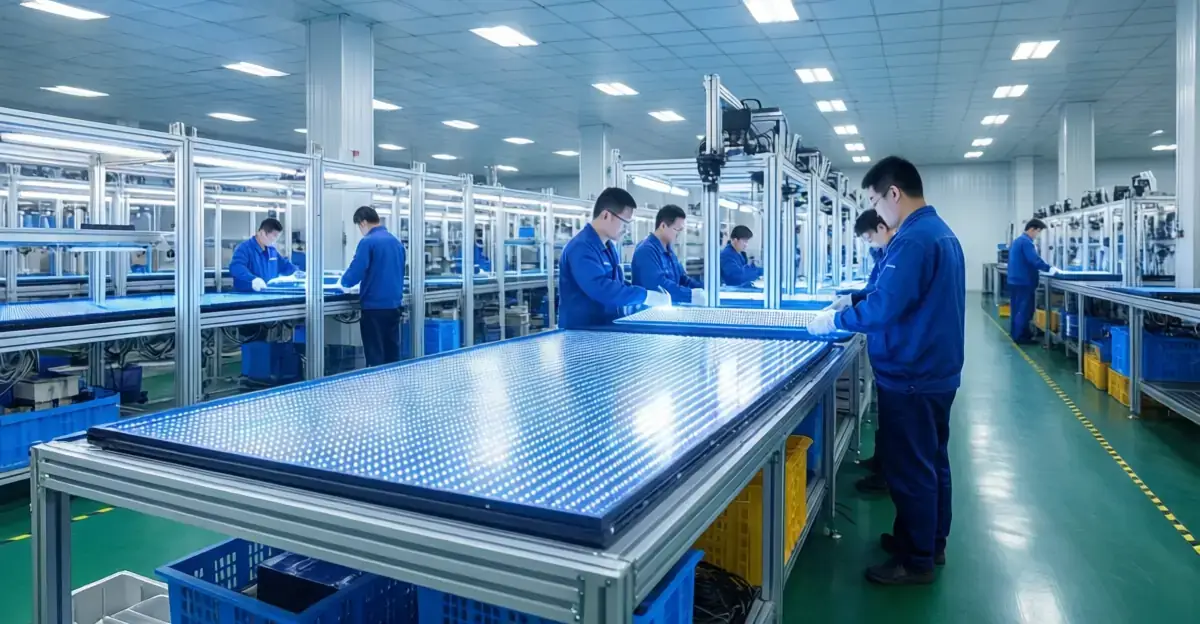
As B2B lighting sourcing 2026 increasingly demands more advanced, interconnected products, rigorously evaluate the factory’s internal R&D capabilities. Inquire thoroughly about the size and expertise of their engineering team, their proven ability to design custom Printed Circuit Boards (PCBs), their proficiency in advanced optical design, and their hands-on experience with modern smart control protocols (such as DALI-2, Zigbee 3.0, or Bluetooth Mesh). A manufacturer that invests heavily in ongoing R&D is exponentially better positioned to support your complex OEM and ODM (Original Design Manufacturing) projects long-term.
Core Step 2: Factory Inspection - On-Site and Virtual Audits
Once you have successfully narrowed down your options to a shortlisted group of highly potential candidates, conducting a thorough, critical factory inspection is paramount. Never commit to a large-scale commercial order without deeply analyzing the manufacturing environment firsthand, either through a physical visit or a comprehensive virtual audit.
The Critical Importance of On-Site Audits
Whenever logistically and financially feasible, traveling to China to conduct an on-site audit provides the most accurate, unfiltered assessment of an OEM lighting manufacturer China. A physical on-site visit allows you to accurately gauge the true operational scale of the facility, the actual condition and age of the manufacturing equipment, and the overall corporate culture and worker morale.
During your visit, critically observe the entire production flow. Is the layout logical, streamlined, and highly organized? Are the assembly workers adequately trained, focused, and utilizing proper safety gear? Pay incredibly close attention to the warehouse environment; a meticulously managed, climate-controlled inventory system for sensitive raw materials and finished goods is a massive, highly positive indicator of a professionally run facility.
Conducting Highly Effective Virtual Audits in 2026
Recognizing that international travel is not always practical, rapid, or cost-effective, virtual audits have matured into a highly sophisticated and universally accepted component of modern B2B lighting sourcing 2026. However, a reliable lighting supplier must be fully equipped, technically capable, and totally willing to offer a comprehensive, transparent virtual tour.
To guarantee a virtual audit is genuinely effective and not just a curated marketing presentation, strictly insist on a live, unedited, high-definition video call rather than pre-recorded, highly polished promotional videos. Direct the factory’s camera operator to show you specific, critical areas of interest in real-time:
- The incoming materials inspection area: Demand to see exactly how they quarantine and handle rejected or substandard components.
- The main assembly lines: Observe the real-time pace of work, the implementation of standard operating procedures, and the balance between automated machinery and manual labor.
- The critical aging test room: Visually verify that all manufactured products undergo standardized, rigorous aging processes (typically ranging from 12 to 24 continuous hours) before moving to the packaging phase.
- The internal testing laboratory: Ask for live, unscripted demonstrations of key equipment such as integrating spheres (for capturing vital photometric data) and IP rating environmental chambers (for testing rigorous water and dust resistance).
A genuinely transparent, high-quality manufacturer will confidently welcome these stringent requests, whereas a disguised broker or a substandard factory will inevitably make excuses, experience “technical difficulties,” or actively avoid showing you certain critical operational areas.
Core Step 3: Evaluating the Quality Control System
The true hallmark of a genuinely reliable lighting supplier is not simply their ability to produce a single, flawless “golden sample,” but their proven, documented capacity to maintain strict, unyielding quality consistency across tens of thousands of production units over many years. This critical consistency is entirely, 100% dependent on the rigor of their internal Quality Control (QC) system.
The Foundational Pillars of Manufacturing QC
A robust, world-class QC system encompasses three critical, non-negotiable stages:
- Incoming Quality Control (IQC): The final quality of the finished product is inextricably linked to the quality of its base components (LED chips, electronic drivers, thermal heat sinks). A rigorous, uncompromising IQC process ensures that absolutely all raw materials meet exact specifications before they are ever allowed to enter the assembly line. Interrogate the factory about their specific component testing procedures, their sampling rates, and their strict policies for managing and auditing their own sub-tier suppliers.
- In-Process Quality Control (IPQC): During active assembly, dedicated QC inspectors must constantly monitor the production line to identify and rectify errors immediately as they occur. This proactive approach prevents defective units from proceeding further down the manufacturing line, saving immense amounts of time and wasted materials. Look for clearly defined, highly visible Standard Operating Procedures (SOPs) explicitly posted at every single workstation.
- Final Quality Control (FQC) and Outgoing Quality Control (OQC): Before final packaging, every single completed unit must be rigorously tested for basic functionality, critical electrical safety (such as high-voltage dielectric withstand tests and ground continuity tests), and visual cosmetic defects. OQC involves a final, independent random inspection of the fully packaged goods immediately prior to container loading and shipment.
Advanced In-House Testing Facilities
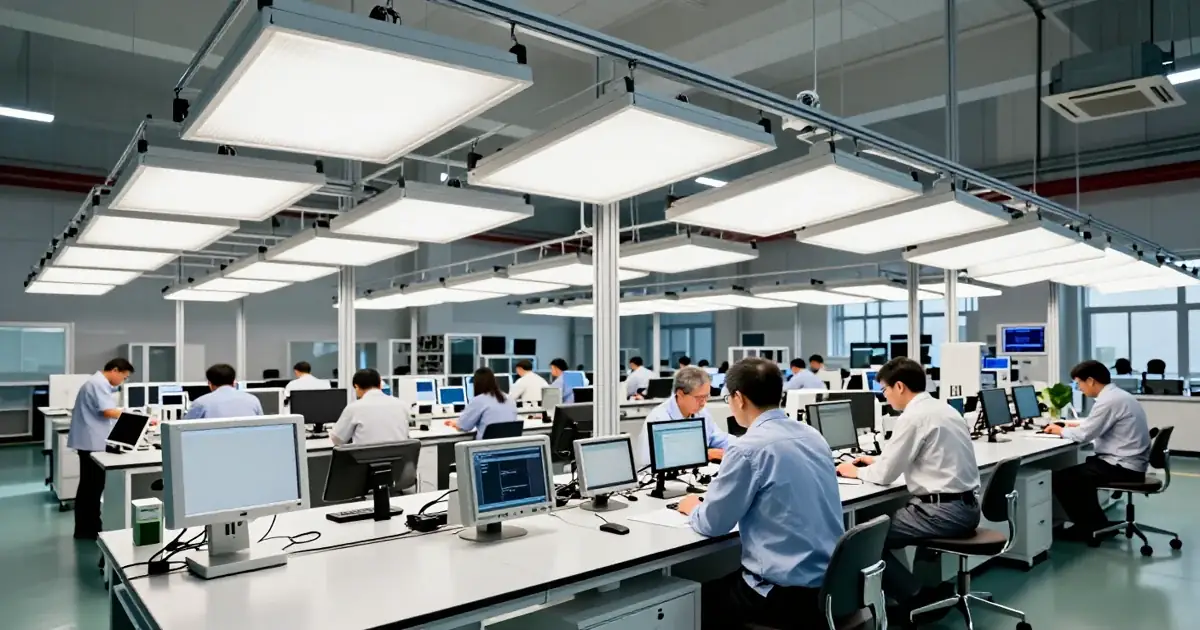
An elite, top-tier OEM lighting manufacturer China will possess a sophisticated, fully equipped in-house laboratory to conduct comprehensive performance, safety, and long-term durability testing. Key critical equipment you must look for includes:
- Integrating Spheres and Goniophotometers: Essential for the precise, scientific measurement of total lumen output, correlated color temperature (CCT), color rendering index (CRI), and accurate spatial light distribution curves.
- Thermal Shock and Environmental Testing Chambers: To scientifically ensure that designed heat sinks perform adequately under stress and that the final product can reliably withstand extreme operating temperatures and humidity levels over its expected lifespan.
- High-Voltage Surge Testing Equipment: Absolutely crucial for outdoor, street, and industrial fixtures to guarantee robust resilience against grid power fluctuations and severe lightning strikes.
- Salt Spray Corrosion Testers: Vital to evaluate the long-term corrosion resistance of metal housings and protective coatings, especially for products destined for harsh coastal or demanding marine applications.
Openly discuss their historical defect rates and deeply analyze their Return Merchandise Authorization (RMA) process. A genuinely reliable factory will be highly transparent about their defect rate (which, in reality, is rarely ever true absolute zero in mass production) and will already have a clear, documented, and fair process in place for swiftly compensating or replacing defective goods without causing you massive administrative headaches.
Value Add: Identifying Brokers vs. Genuine Real Factories
One of the most persistent, frustrating challenges in B2B lighting sourcing 2026 is successfully distinguishing a genuine, capable manufacturing factory from a slick trading company merely acting as a manufacturer. While trading companies certainly have their specific place in the ecosystem (often offering broader product ranges and occasionally better English communication skills), partnering directly with a genuine factory is usually an absolute necessity for complex OEM projects, securing highly competitive pricing, and maintaining strict, unyielding quality control.
Analytical Techniques for Identification and Verification
- Deep Product Catalog Focus: A real, dedicated OEM lighting manufacturer China typically specializes heavily in one specific, distinct category (e.g., exclusively producing commercial track fixtures, or focusing solely on outdoor architectural floodlights). If a company’s catalog wildly includes everything from crystal residential chandeliers to heavy industrial high bays and solar street lamps, they are almost certainly a trading company aggregating products from a vast network of disparate sources.
- The Intense Technical Interrogation: During video meetings or in-person visits, deliberately ask highly specific, deeply technical questions regarding electronic driver specifications, internal thermal management strategies, or specific PCB layout designs. Genuine factory engineers can typically answer these complex questions immediately and with deep technical authority; trading company sales representatives will almost always need to “check with the production team” and promise to get back to you later.
- Pricing Anomalies and MOQs: Trading companies mathematically must add a profit markup, inevitably making their unit prices slightly higher than direct, ex-factory prices. Conversely, they might frequently offer suspiciously low Minimum Order Quantities (MOQs) because they actively consolidate smaller orders from multiple buyers, whereas a real, operational factory requires significantly higher MOQs to financially justify setting up a dedicated mass production run.
- Strict Location Analysis: Utilize online satellite mapping tools to critically check their official registered business address. If the physical address points clearly to a high-rise downtown commercial office building rather than a sprawling industrial park on the outskirts of the city, it is a massive, undeniable red flag indicating a trading operation.
Value Add: Common Sourcing Mistakes to Avoid at All Costs
Even highly experienced, veteran procurement buyers can fall into dangerous traps when navigating the complexities of the Chinese manufacturing market. Actively avoiding these common, expensive errors will save your company significant time, capital, and immense frustration.
The Dangerous Lowest Price Fallacy
The single most dangerous, destructive mistake in procurement is prioritizing the absolute lowest possible unit price over all other critical factors. In the highly competitive illumination industry, a price quote that seems far too good to be true invariably involves hidden, dangerous compromises. A manufacturer offering rock-bottom pricing may be secretly substituting premium, branded LED chips with inferior, low-bin alternatives, dangerously reducing the thickness and weight of crucial aluminum heat sinks, or utilizing cheap, non-isolated electronic drivers that pose severe electrical safety risks and drastically reduce product lifespan. Always critically evaluate the Total Cost of Ownership (TCO), which realistically includes international shipping, import tariffs, potential defect replacement costs, and the catastrophic risk of severe brand damage from selling substandard, failing goods to your clients.
Rushing the Critical Sample Phase
Never, ever approve full mass production based on a single, hastily produced initial sample. The sampling phase is your golden, unmissable opportunity to rigorously, aggressively test the product’s real-world performance and evaluate the manufacturer’s communication responsiveness. Demand multiple samples, test them independently and rigorously in your home country using your own equipment, and clearly, comprehensively document any required engineering modifications. Ensure the final approved “golden sample” is physically signed, sealed, and retained by both parties, serving as the absolute, undisputed legal benchmark for all future mass production runs.
Relying on Vague, Incomplete Specifications
Assuming the factory intuitively understands your unspoken quality expectations or aesthetic preferences is a guaranteed recipe for manufacturing disaster. You must provide exhaustive, meticulously written specifications covering every conceivable detail: exact required lumen output, specific acceptable brand requirements for critical internal components (like drivers or LED packages), detailed packaging materials and drop-test requirements, strict labeling instructions, and precise, mathematical color temperature tolerances (e.g., strictly 3000K ± 150K). The more painstakingly detailed your Bill of Materials (BOM) and technical engineering drawings are, the less room there is for costly, time-consuming misunderstandings or unauthorized component substitutions.
Frequently Asked Questions (FAQ)
Q1: How can I verify if an OEM lighting manufacturer in China holds genuine certifications? Always request a clear copy of the actual certificate, not just a badge on their website. More importantly, take the certificate number and verify it directly on the official database of the issuing authority (e.g., UL, TUV, SGS). Genuine factories expect and welcome this verification.
Q2: What is a typical Minimum Order Quantity (MOQ) for a reliable lighting supplier? MOQs vary significantly depending on the product type. For highly customized OEM projects, expect an MOQ of at least 500 to 1,000 units to justify the setup costs for dedicated production runs. If a supplier offers an incredibly low MOQ (e.g., 10 units) for a bespoke product, they are likely a trading company consolidating orders.
Q3: Is it mandatory to hire a third-party inspection agency before shipment? While not legally mandatory, it is highly recommended, especially for your first few orders with a new supplier. A professional Pre-Shipment Inspection (PSI) by a reputable third-party agency acts as a crucial, independent safeguard against defective goods being loaded into the shipping container, saving you immense headaches and financial loss upon arrival.
Value Add: Essential Communication and Negotiation Skills
Successfully securing a reliable lighting supplier is not purely a cold, technical engineering exercise; it relies heavily on masterful relationship management, mutual respect, and highly effective cross-cultural communication.
Building Strategic Long-Term Partnerships
In 2026, the absolute most successful sourcing strategies are built on deep, strategic partnerships, not purely combative, transactional interactions. Treat your chosen OEM lighting manufacturer China as a highly valued extension of your own internal business operations. Maintaining regular, transparent communication, openly sharing market feedback and sales trends, and providing accurate, long-term purchasing forecasts helps the factory intelligently plan their production schedules and clearly demonstrates your serious, long-term commitment. A factory that genuinely views you as a valuable, reliable, long-term strategic partner will naturally prioritize your urgent orders, offer better, more competitive pricing over time, and be vastly more willing to invest their own resources into collaborating with you on custom R&D projects.
Enforcing Clear, Unambiguous Communication
Inherent language barriers and cultural differences can easily lead to incredibly costly manufacturing errors. When communicating via daily emails or instant messaging apps, always use clear, direct, and simple English. Strictly avoid confusing regional idioms, local slang, and overly complex, convoluted sentence structures. Utilize bullet points, numbered lists, and highly descriptive visual aids (such as engineering diagrams or clear photos with bright red annotations) as much as humanly possible. Always make it a strict habit to ask the factory representatives to clearly summarize their exact understanding of your instructions back to you to ensure absolute alignment before any work begins.
Mastering Strategic, Win-Win Negotiation
Effective negotiation should always focus on creating a sustainable, win-win scenario for both parties, rather than simply trying to crush the supplier on unit price. While securing a competitive price is obviously important, you can and should also negotiate fiercely on other crucial, value-adding terms:
- Favorable Payment Terms: Standard industry terms for new clients are almost always a 30% upfront deposit with the remaining 70% balance paid immediately before shipment (strictly after a successful, independent third-party quality inspection). As your business relationship grows and trust is established, you should actively negotiate for better, more flexible terms, such as payment against the copy of the Bill of Lading (B/L) or even highly desirable open account (O/A) credit terms (e.g., Net 30 or Net 60 days).
- Guaranteed Lead Times: Aggressively negotiate strictly guaranteed production lead times and insist on including specific financial penalty clauses in the official purchase contract for any late shipments. This legally protects your sensitive supply chain schedule and ensures your products arrive when your clients expect them.
- Comprehensive Warranty Coverage: A standard, acceptable warranty in the commercial industry is typically 3 to 5 years. Negotiate incredibly clear, unambiguous terms regarding exactly what constitutes a valid defect, who bears the cost of return shipping, and the exact, step-by-step procedure for claiming fast warranty replacements or financial credits.
Conclusion
Successfully finding and partnering with a truly reliable OEM lighting manufacturer in China in 2026 is a complex, multi-faceted, but ultimately highly rewarding strategic endeavor. By systematically and relentlessly executing rigorous qualification audits, conducting deeply thorough physical or virtual factory inspections, and heavily evaluating the intricate details of their internal quality control systems, you can significantly mitigate your supply chain risks and secure a manufacturing partner fully capable of delivering consistent, world-class excellence.
Always remember to remain highly vigilant against sophisticated brokers posing as genuine factories, actively avoid the dangerous trap of prioritizing the absolute lowest price over total overall value, and invest significant time and effort into building strong, highly communicative, and mutually beneficial long-term relationships. The global landscape of B2B lighting sourcing is continually, rapidly advancing; staying highly informed, demanding absolute transparency, and relentlessly prioritizing quality will definitively ensure your brand’s illumination products stand out prominently in an intensely competitive global market. Thorough, uncompromising due diligence is not just a basic protective measure; it is your ultimate strategic advantage.
Professional Sourcing Consultation
Embarking on the critical journey to find the absolute perfect manufacturing partner requires deep industry expertise, significant dedicated time, and specialized resources. If you are actively looking to aggressively streamline your corporate procurement process, heavily mitigate your supply chain risks, and absolutely guarantee the highest possible quality for your next major illumination project, seeking professional, unbiased guidance is incredibly invaluable. Connect with experienced industry procurement specialists and supply chain consultants today to optimize your entire procurement strategy, conduct rigorous, uncompromising factory audits on your behalf, and secure the ideal, fully vetted manufacturing solutions tailored specifically and perfectly to your unique, demanding business requirements. Let expert, data-driven insights drive your massive sourcing success in 2026 and far beyond.