2025 Chinese-Style Lighting Comeback: Demand, Design & Sourcing Insights
Why Chinese-Style Lighting Is Returning to the Market Conversation
Chinese-style lighting is regaining commercial attention because it meets two needs at the same time. It offers a recognizable cultural language, and it can be adapted to contemporary interiors without feeling historically rigid. That combination is increasingly valuable in hospitality, residential, and decorative export markets where buyers want atmosphere and identity rather than purely neutral fittings.
The comeback is therefore not just about nostalgia. It reflects a wider design shift toward materials, forms, and visual references that feel rooted, crafted, and emotionally legible. In this context, Chinese-style lighting is working less as a traditional replica category and more as a flexible design direction.
What the Market Is Actually Responding To
Cultural Identity With Broader Commercial Use
One reason this category is gaining attention again is that it can communicate cultural character without relying on heavy ornament in every project. In boutique hotels, tea spaces, premium dining environments, villas, and selected residential interiors, Chinese-style lighting helps establish a stronger sense of place than generic decorative fixtures.
Better Balance Between Tradition and Modern Simplicity
The most commercially successful products are usually not the most literal ones. Buyers are responding to collections that simplify traditional motifs, use cleaner proportions, and reduce decorative overload. This makes the category easier to use in contemporary interiors while preserving enough identity to feel distinct.
Design Directions That Are Working Best
New Chinese Rather Than Historical Reproduction
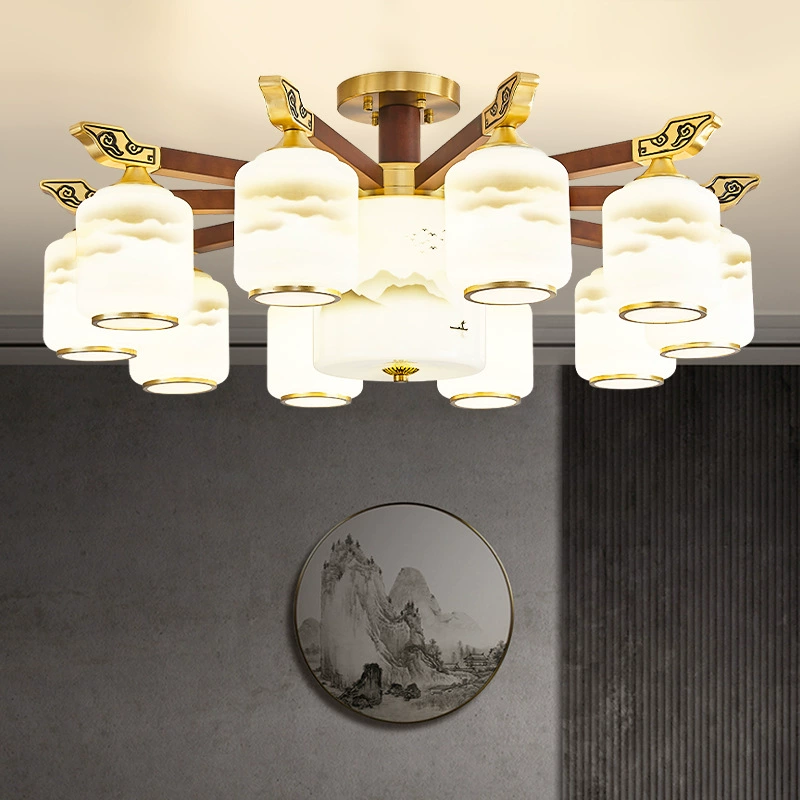
The strongest commercial direction is often the “new Chinese” approach: simplified lines, restrained ornament, warm materials, and composition that feels calm rather than theatrical. This allows the fixtures to work in modern hospitality and residential spaces that want cultural depth without becoming theme-driven.
Material-Led Expression
Material choice remains central to the category. Metal, wood, glass, fabric, and stone-like accents all contribute to the emotional tone of the fixture. What buyers typically want is not merely a traditional silhouette, but a material combination that looks convincing at close range and supports the intended interior palette.
Controlled Warmth in Light and Finish
Chinese-style lighting generally benefits from warm visual temperature, both in finish and in emitted light. Brushed brass, antique bronze, dark wood, and softly diffused warm output often help the fixtures feel grounded and composed. Excessively bright finishes or harsh optical output usually weaken the mood that makes the category appealing.
Where Demand Is Strongest
Boutique Hospitality
Hotels, guesthouses, tea houses, and dining projects are among the most natural applications for this style because they often need a stronger narrative environment. In these spaces, Chinese-style lighting can support brand identity and spatial atmosphere more directly than neutral decorative products.
Residential and Villa Projects
In residential settings, the style tends to work best when used selectively. Entry areas, dining rooms, bedrooms, and feature spaces often carry it better than a whole-house repetition of the same visual language. Buyers are often looking for a refined accent, not a fully themed environment.
Export and Regional Decorative Markets
Outside the domestic market, this category can perform well where there is clear interest in Asian-inspired interiors, culturally specific hospitality, or decorative collections with a strong point of view. Here, commercial success depends less on general trend language and more on whether the collection is edited carefully for the target buyer.
What Buyers Should Evaluate Before Sourcing
Design Restraint
Products in this category are easy to overdesign. Too many symbolic details, too much surface treatment, or oversized decorative elements can make the fixture difficult to place. The better collections usually communicate identity through proportion, finish, and a few disciplined references.
Material Authenticity
This category is judged heavily by how materials look and feel in real life. If wood grain, metal finish, glass quality, or joinery detail feels artificial, the product quickly loses the sense of craft that buyers expect. Sample review should therefore focus on tactile and visual credibility, not only on form.
Project Fit and Scale
A Chinese-style chandelier or wall light can look elegant in isolation but become visually heavy if the scale is not right for the room. Buyers should check dimensions, drop height, projection depth, and visual weight carefully, especially in hospitality projects where the fixture is part of a repeated scheme.
Common Mistakes in This Category
Treating “Chinese Style” as a Single Visual Formula
The market is more segmented than that. Some projects need a contemporary interpretation, others want a calmer Zen influence, and some genuinely want classical richness. Collections perform better when they understand these distinctions instead of blending everything into one generic decorative language.
Overemphasizing Decoration and Underemphasizing Lighting Quality
Decorative identity should not come at the expense of practical lighting behavior. Output, glare control, serviceability, and installation logic still matter, especially in hotel and residential environments where the fixtures are part of everyday use.
Conclusion
Chinese-style lighting is returning because it offers more than heritage styling. At its best, it gives projects a way to express warmth, identity, and material richness in a format that can still feel contemporary and commercially viable.
For suppliers and buyers, the opportunity lies in disciplined interpretation: balanced design, believable materials, appropriate scale, and lighting quality that supports the space rather than merely decorating it.
Related Reading: